close
Choose Your Site
Global
Social Media
Views: 0 Author: Site Editor Publish Time: 2026-05-23 Origin: Site
While brushless technology dominates marketing headlines for its efficiency and lifespan, upgrading isn't always the smart engineering or financial choice. Manufacturers often assume newer automatically means better in motion control applications. This assumption can easily derail your project budget. Choosing between motor types requires a strict evaluation of duty cycles, system budgets, and environmental constraints. Ignoring these operational realities often leads to severe over-engineering and wasted capital. You cannot simply swap components without understanding the underlying mechanics and lifetime usage limits. This guide provides a definitive, engineering-backed evaluation framework to help decision-makers. You will learn exactly when a Brushed Motor remains the superior operational and commercial choice. We also detail the specific scenarios where a brushless upgrade becomes strictly necessary for your application.
Cost vs. Utilization: Brushed motors offer superior ROI for intermittent applications with annual operating times under 2,000–3,000 hours.
Control Simplicity: A brushed motor requires vastly simpler circuitry (basic H-bridge) compared to the complex microcontrollers and Electronic Speed Controllers (ESCs) needed for brushless systems.
Low-Speed Performance: Brushed technology naturally avoids the "cogging" or stuttering effects common in sensorless brushless motors at very low speeds.
Physical Limitations: Applications requiring continuous operation or speeds exceeding 5,000 RPM typically mandate a brushless architecture to avoid "brush floating" and rapid mechanical wear.
Engineering teams frequently fall into the trap of performance overkill. Paying a premium for brushless efficiency becomes wasted capital if your application rarely runs. High-end motors offer extended lifecycles. However, many consumer and industrial products will never utilize those extra thousands of operating hours. You must align component longevity against the actual expected life of the final product.
The critical break-even point lies in the duty cycle threshold. Intermittent applications see immense benefits from brushed components. Automotive power seats only move a few seconds per day. Automated windows and intermittent valves operate in similarly short bursts. For these tasks, mechanical switching works perfectly. Conversely, continuous-run applications demand brushless technology. HVAC fans and fluid pumps run constantly. They require frictionless operation to prevent rapid component degradation.
You must also break down true system-level costing. The motor hardware itself represents only a fraction of the budget. A standard brushed unit costs fundamentally less to manufacture. However, the real financial savings come from the control electronics. Brushless setups demand three-phase semi-bridge drivers. They also require dedicated microcontrollers to sequence the electromagnets. This steepens both initial procurement costs and overall design complexity.
Cost Variable | Brushed System | Brushless System (BLDC) |
|---|---|---|
Motor Hardware Cost | Low (Simple winding, permanent magnets) | Moderate to High (Complex stators) |
Controller Complexity | Low (Direct DC power or basic H-bridge) | High (Requires ESC and microcontrollers) |
Engineering Time | Minimal (Plug-and-play integration) | Significant (Tuning and programming required) |
Ideal Duty Cycle | Intermittent (< 3,000 hours/year) | Continuous (> 10,000 hours/year) |
Sensorless brushless motors struggle to determine rotor position during initial startup. They rely on detecting back-electromotive force (back-EMF). Back-EMF only generates when the rotor is already moving. This creates a jerking motion known as cogging. Brushed units operate entirely differently. Physical contacts deliver immediate power to the precise required coil. This provides smooth, continuous, and precise torque starting from absolute zero RPM. Applications requiring delicate slow-speed crawling rely heavily on this mechanical advantage.
Equipment often faces sudden blockages or extreme loads. These events cause a motor to stall. Under brief stall conditions, brushed motors safely deliver up to five times their rated torque. They push through mechanical resistance using brute force. Electronic brushless systems cannot match this without triggering complex electronic overrides. An Electronic Speed Controller (ESC) will immediately cut power during a stall to prevent thermal runaway. This safety feature often ruins applications needing raw push-through power.
Electronic controllers remain highly vulnerable to environmental extremes. Brushless systems rely heavily on heat-sensitive electronic components. Extreme cold can cause these silicon chips to fail. Extreme ambient heat easily pushes ESCs past their thermal limits. A fully mechanical brushed system operates reliably in unregulated environments. The lack of fragile microchips makes them incredibly resilient in extreme cold, heavy vibrations, or remote outdoor installations.
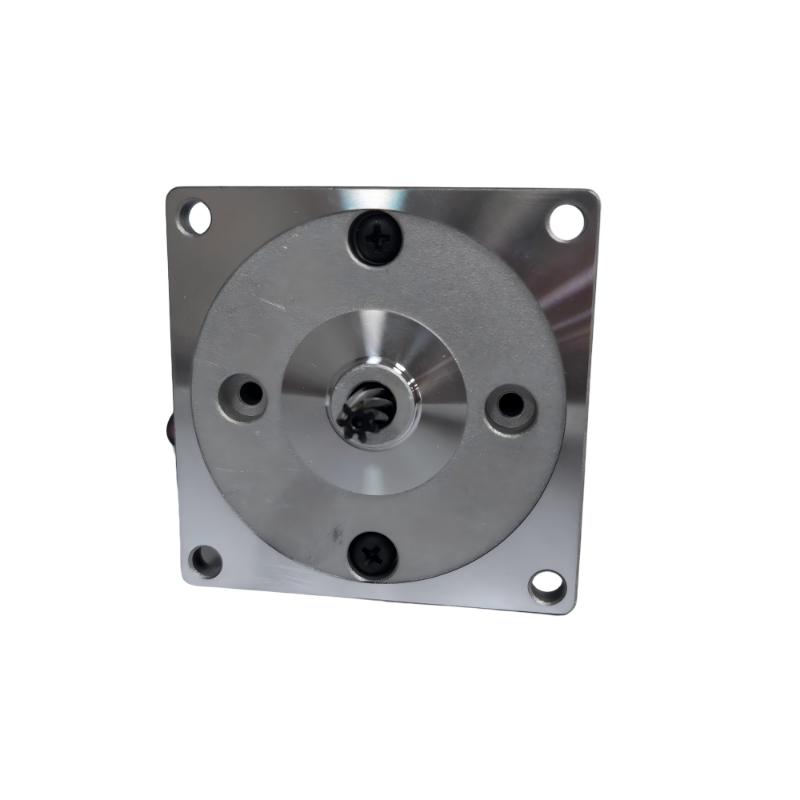
Ease of deployment heavily influences modern engineering timelines. Legacy system upgrades usually operate on strict budget constraints. In these scenarios, integrating standard components like a Series 42 Brushed DC Motor saves weeks of development time. You can operate them with minimal programming. They often require only a simple DC power source. For reversible operation, a basic single-transistor setup or DPDT switch works flawlessly. This dramatically reduces potential points of failure.
High-speed applications expose the physical limits of mechanical switching. Physics dictates a phenomenon known as "brush floating" at extreme speeds. Once a rotor exceeds approximately 5,000 RPM, the carbon brushes struggle to maintain physical contact. They begin to physically separate from the fast-spinning commutator. This separation causes severe arcing, massive power loss, and catastrophic mechanical wear. If your design requires sustained high-speed operation, you must adopt a frictionless BLDC architecture.
Safety compliance removes the luxury of choice in hazardous environments. Brushed motors naturally produce sparks during operation. The constant making and breaking of electrical contact at the commutator creates arcing. This presents a severe ignition risk. Environments containing combustible dust, chemical fumes, or flammable gases strictly forbid these sparks. A fully enclosed BLDC motor becomes entirely non-negotiable for these critical safety applications.
Brush arcing does more than create sparks. It also generates significant Electromagnetic Interference (EMI). This electrical noise easily disrupts sensitive surrounding sensors and microprocessors. Furthermore, the physical friction creates an audible hum or scraping noise. Many modern applications require absolute acoustic silence and zero EMI. Medical imaging equipment and precision laboratory tools are prime examples. A BLDC utilizing sine commutation eliminates both audible friction and electrical noise entirely.
High-frequency industrial usage forces a transition away from consumable parts. Continuous-run applications destroy carbon brushes rapidly. You must select specific upgrade paths based on torque and space needs. Engineers often transition to a 42mm bonding BLDC motor for compact, continuous-run tooling. This provides high power density in tight enclosures. For heavy-duty industrial automation, a 57mm sintered BLDC motor offers immense torque. These solutions provide the zero-maintenance baseline required for 24/7 manufacturing operations.
Making the right engineering choice requires an objective framework. You must evaluate four specific operational pillars before committing to a design path. Follow these steps to map your requirements accurately.
Step 1: Define the Application Duty Cycle. You must map out expected continuous run time versus intermittent bursts. Identify how many hours the unit will run annually. Set clear operational targets. Greater than 10,000 hours demands a brushless setup. Less than 3,000 hours typically favors a brushed solution.
Step 2: Audit the Operating Environment. Thoroughly check the intended installation area for flammable materials. Evaluate expected temperature fluctuations. Assess potential exposure to dust and debris. An open-vented brushed unit fails quickly in dirty environments. A sealed brushless unit survives these harsh particulate conditions.
Step 3: Assess the Technical Debt Budget. Determine if your engineering team has the bandwidth for complex electronics. Ask if they can program timing accurately. Can they tune ESC parameters efficiently? Evaluate their capacity to manage complex three-phase wiring configurations. If resources are tight, avoid electronic commutation.
Step 4: Space and Weight Constraints. Evaluate your physical footprint limits. Brushless motors offer a much higher power-to-weight ratio. Determine if this premium density is truly necessary to meet the size constraints of the final product.
Mechanical wear creates unavoidable byproducts. The constant friction between brushes and the commutator grinds down the carbon material over time. This process slowly releases fine carbon dust inside the motor housing. In many industrial settings, this dust goes completely unnoticed. However, it severely impacts specialized applications. Clean-room environments cannot tolerate particulate generation. Precision optical instruments will suffer lens degradation if carbon dust escapes the housing.
You must build maintenance realities into your product planning. Brush replacement is an inevitable requirement. However, you can frame this trait as a predictable operational expense. Instead of hiding the flaw, incorporate it into standard maintenance manuals. Brush wear follows a highly predictable curve based on load and speed. You can easily schedule an OpEx activity to swap brushes. This heavily contrasts with the catastrophic, unpredicted electronic failures often experienced in complex BLDC controllers.
Friction directly translates into localized heat generation. The physical contact zone between the brush and the fast-spinning commutator gets exceptionally hot during heavy loads. You cannot enclose these motors entirely without risking severe thermal buildup. Adequate ventilation design becomes a mandatory requirement for your product housing. You must provide airflow paths to dissipate this localized heat. Failure to manage thermal output will rapidly accelerate brush wear and melt internal plastic structural components.
Final Verdict: Brushed motors are not obsolete legacy components. They remain highly specialized, cost-effective solutions for low-speed, high-torque, and intermittent applications.
Evaluate the True Budget: Do not pay for 10,000 hours of frictionless lifecycle if your product only operates for 500 hours annually.
Prioritize Low-Speed Control: Rely on physical commutation when smooth, zero-cogging torque is required directly from startup.
Map Financial Metrics: Promptly map your financial metrics and duty cycle using the operational frameworks provided in this guide.
Next Steps: Contact your engineering sales team today. Request detailed spec sheets or prototype samples to physically test torque ratings and physical footprint constraints.
A: Generally no. Brushless technology offers vastly better power density. It fits larger magnetic fields into smaller physical spaces. However, brushed units can offer superior stall torque output in very short bursts. They naturally push through resistance without electronic limiters shutting them down.
A: Replacement intervals depend highly on the applied load and operating speed. Most industrial systems evaluate brush health around the 2,000 to 3,000-hour operational mark under full load. Running at lower speeds or intermittent cycles extends this lifespan significantly.
A: Yes. They perform significantly better than sensorless brushless motors at low speeds. They lack the electronic "cogging" or stuttering during startup. Achieving this same low-speed smoothness in a BLDC system requires upgrading to an expensive "sensored" setup with external position trackers.