close
Choose Your Site
Global
Social Media
Views: 0 Author: Site Editor Publish Time: 2026-06-01 Origin: Site
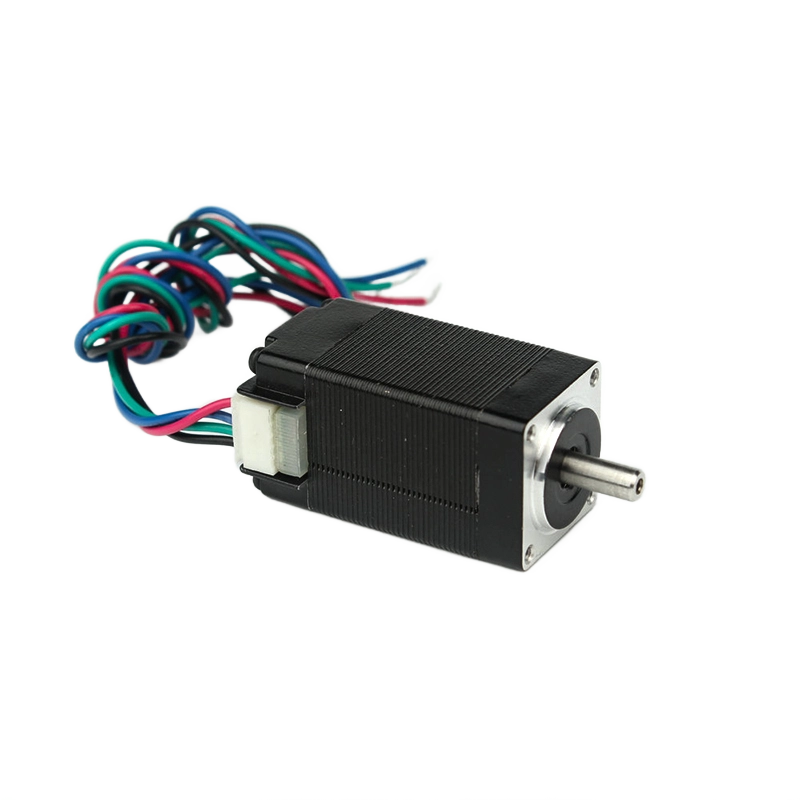
Sourcing a commercial-grade NEMA Stepper Motor requires more than matching a basic specification sheet. Off-the-shelf units often force engineers to compromise early in the design phase. You might sacrifice torque limits, shaft dimensions, or wiring durability just to fit a standard catalog item. These compromises directly cause premature field failures in continuous-duty applications.
A successful procurement strategy looks completely different. It involves partnering with a manufacturer capable of delivering custom mechanical modifications. You need optimized electrical windings and exact shaft lengths. The ideal manufacturing partner delivers these customizations without inflating lead times or demanding impossible minimum order quantities (MOQs).
This guide breaks down how you should evaluate stepper motor manufacturers. We cover which internal specifications dictate actual field reliability. Finally, you will learn how to accurately define your custom requirements before requesting a quote.
NEMA indicates mounting, not power: A NEMA rating defines physical flange size and mounting holes, not the motor's torque, speed, or electrical characteristics.
Wiring is the true failure point: NEMA stepper motors typically have a physical lifespan of 10,000+ hours; field failures are most commonly caused by wiring fatigue, insulation degradation from excessive current, or connector looseness.
Customization prevents over-engineering: Specifying custom features—such as hollow shafts, vacuum-rated materials, or exact-match windings—often proves more cost-effective than over-sizing a standard motor.
Closed-loop systems rival servos: Integrating a custom stepper motor with closed-loop (FOC) control provides 2 to 3 times the torque of a similar-sized BLDC servo motor at 20–50% of the rated speed.
Many hardware engineers fall for the "size equals power" fallacy. They assume larger frames automatically deliver more usable torque. We must clarify how NEMA frame sizes actually work in the real world. The National Electrical Manufacturers Association (NEMA) standardizes physical integration, not performance. The assigned number derives directly from flange dimensions in inches. It strictly dictates mounting hole placement. It does not dictate holding torque, internal coil efficiency, or horsepower.
You must match the physical frame to your application reality intelligently.
Compact Precision: Medical devices, automated pipettes, and optical stages demand strict space constraints. Weight remains highly critical for these delicate assemblies. A miniature NEMA14 motor or a NEMA 11 perfectly fits these applications. They deliver adequate holding torque without adding unnecessary bulk to moving gantries.
Standard Automation: NEMA 17 and NEMA 23 serve as the absolute workhorses of the industry. You will find them everywhere across 3D printing, packaging machinery, and textile equipment. They benefit from a massive global ecosystem of compatible drivers and mounting brackets.
Heavy-Duty Output: High-resistance applications completely reject undersized motors. Heavy CNC routing, plasma tables, and industrial linear actuators push physical limits daily. For these grueling tasks, maximum holding torque is non-negotiable. You need a NEMA42 stepper motor or an ultra-large NEMA52 stepper motor to ensure your system never stalls under heavy cutting loads.
Standard catalog options rarely satisfy complex engineering projects perfectly. You must evaluate manufacturers based on their specific customization capabilities. A strong partner adapts the motor to your machine, rather than forcing you to adapt your machine to the motor.
Mechanical Form Factor Modifications
Standard cylindrical bodies often fail to fit tight enclosures. Ask suppliers if they can reliably supply non-standard configurations. Pancake or flat structures work beautifully for restricted Z-axis space. Hollow-shaft designs allow you to route communication cables, fluids, or laser beams directly through the center axis. This simplifies cable management significantly.
Electrical & Winding Optimization
Voltage mismatches ruin system efficiency. Look for suppliers who actively adjust wire gauge and turn counts. They should match your specific driver voltage perfectly. They must also balance single-stack versus double-stack configurations. This balancing act optimizes the dynamic torque curve specifically for your target RPM.
Common Mistake: Buying an off-the-shelf high-inductance motor and running it at high speeds. High inductance chokes the current flow at high RPMs, causing massive torque drop-off. Custom windings solve this issue instantly.
Engineers constantly worry about mechanical shaft failure. However, historical user data shows a very different reality. Pure mechanical failure rarely happens under normal loads. Thermal degradation and wiring fatigue represent the true bottlenecks in continuous automation.
Internal Component Quality
You cannot judge an industrial motor purely by its exterior finish. Internal material choices dictate long-term reliability completely.
Magnets & Rotors: Standard ferrite magnets lose strength over time. High-grade rare earth magnets (like Neodymium) yield much higher torque density. They also improve overall electrical efficiency.
Stator Fill Factor: Maximized winding density within the stator matters greatly. Leaving air gaps inside the stator creates thermal traps. A high fill factor significantly reduces temperature rise during continuous operation, preserving coil insulation over decades.
Bearings: Short, high-frequency, repetitive movements cause localized ball bearing wear. Standard bearings fail quickly here. Oversized ball bearings handle these specific, stuttering radial stresses effortlessly.
End-Cap Construction
Stamped metal end caps flex imperceptibly under heavy radial loads. This microscopic flexing eventually creates vibration issues. Die-cast end caps provide superior structural rigidity. Furthermore, die-cast aluminum acts as a vastly superior heat sink compared to stamped steel alternatives.
Component Area | Standard Off-the-Shelf Motor | High-Reliability Custom Motor |
|---|---|---|
Magnets | Standard ferrite (lower torque density) | Rare earth (higher torque, better efficiency) |
Bearings | Standard sized (prone to high-frequency wear) | Oversized ball bearings (handles stutter steps) |
End-Caps | Stamped steel (poor heat dissipation) | Die-cast aluminum (excellent rigidity & cooling) |
Wiring | Basic PVC insulation | High-temp Teflon, customized strain relief |
Best Practice: Always request a physical teardown sample from your shortlisted manufacturers. You can physically verify the stator fill factor and measure the bearing sizes before approving mass production.
Cost-sensitive projects usually default to traditional open-loop control. Open-loop systems remain highly cost-effective and remarkably simple to program. However, they possess a glaring weakness. They require a 20-30% torque safety margin. You must oversize the motor to prevent missed steps under variable loads.
The Closed-Loop Advantage
Leading manufacturers now offer integrated closed-loop stepper motors. These units provide a highly viable alternative to outrageously expensive servo systems. They utilize magnetic encoders or advanced sensorless virtual encoder algorithms. These sensorless systems monitor Back-EMF to determine exact rotor position.
Closed-loop motors eliminate physical resonance entirely. They also reduce heat generation drastically. Unlike open-loop systems that pump maximum current continuously, closed-loop drives only draw the exact current required for the immediate physical load.
Feature Metric | Open-Loop Stepper | Closed-Loop Stepper |
|---|---|---|
Position Feedback | None (Blind operation) | Absolute (Encoder or Back-EMF) |
Torque Margin Needed | 20-30% oversizing required | Minimal oversizing needed |
Heat Generation | High (Constant max current) | Low (Load-dependent current draw) |
Resonance Issues | High risk at specific speeds | Completely eliminated |
Decision Framework
You must choose wisely between the two technologies. Does your application operate primarily in the lower 50% of the motor's RPM range? Do you require absolute position certainty without any risk of stalling? If you answer yes to both, a custom closed-loop stepper represents the most efficient engineering choice.
Your procurement strategy succeeds or fails based purely on vendor selection. Use a strict vetting checklist to shortlist your sourcing partners. Never base your decision on pricing alone.
Engineering Support & Tooling
Static holding torque data tells you practically nothing about dynamic field performance. Does the manufacturer provide verifiable dynamic torque curve charts? They should offer clear unit conversions, translating oz-in to kg-cm or Nm effortlessly. Look for interactive dynamic torque calculators on their website. Manufacturers who provide robust engineering tools usually understand application complexities better.
Prototyping Speed vs. Volume Production
Assess the supplier's true ability to deliver customized prototypes quickly. You might need custom D-cut shaft lengths, specific JST connectors, or braided wiring harnesses. A strong manufacturing partner delivers these physical prototypes within weeks. You need this agility for bench testing before committing to high-volume offshore production runs.
BOM Rigidity
Bait-and-switch tactics destroy product reliability. Ensure the manufacturer rigidly locks the Bill of Materials (BOM) in writing. They must not silently substitute components after initial prototype validation. Bearing brands, magnet grades, and insulation materials must remain completely identical to your approved engineering samples.
Purchasing a custom stepper motor demands careful, holistic evaluation. You must balance unyielding physical constraints against precise electrical requirements. Proper bearing selection, winding optimization, and wiring durability matter just as much as picking the correct NEMA frame size.
Your next step requires defining your exact dynamic torque requirements at your target operating speed. This precise calculation separates successful field integrations from perpetually underperforming ones.
Stop relying entirely on static specification sheets. Utilize engineering calculation tools to determine your true baseline torque needs. Once you know your numbers, engage a manufacturer's engineering team directly. Request customized samples tailored strictly to your specific use case, and test them rigorously in your actual application environment.
A: Stepper motors inherently lose torque as speed increases due to coil inductance preventing the current from reaching its maximum value quickly enough. Customizing the windings or using a higher voltage supply can mitigate this drop-off.
A: Yes, particularly if you use a closed-loop stepper system. They provide higher low-speed torque than servos and eliminate resonance issues, often at a significantly lower cost.
A: Yes. Stepper motors are designed to operate at higher temperatures than standard DC motors (often up to 80°C–100°C surface temperature). However, upgrading to a motor with higher winding density or switching to closed-loop control can reduce unnecessary heat generation.
A: Holding torque is the rotational force required to move the motor when it is stationary and fully energized. Dynamic (or pull-out) torque is the actual usable force the motor can deliver while moving at a specific speed, which is the metric you should use for evaluation.